
Table of Contents
Losing a tooth can affect not just your smile but also your chewing ability, confidence, and overall oral health. Thanks to modern dentistry, missing teeth can now be replaced effectively. The two most common options are Dental Implants and Dental Bridges.
But the big question is:
👉 Dental Implant vs Bridge – which one is better?
In this detailed guide, we’ll compare dental implant vs bridge based on procedure, durability, cost, advantages, disadvantages, and long-term results so you can make an informed decision.
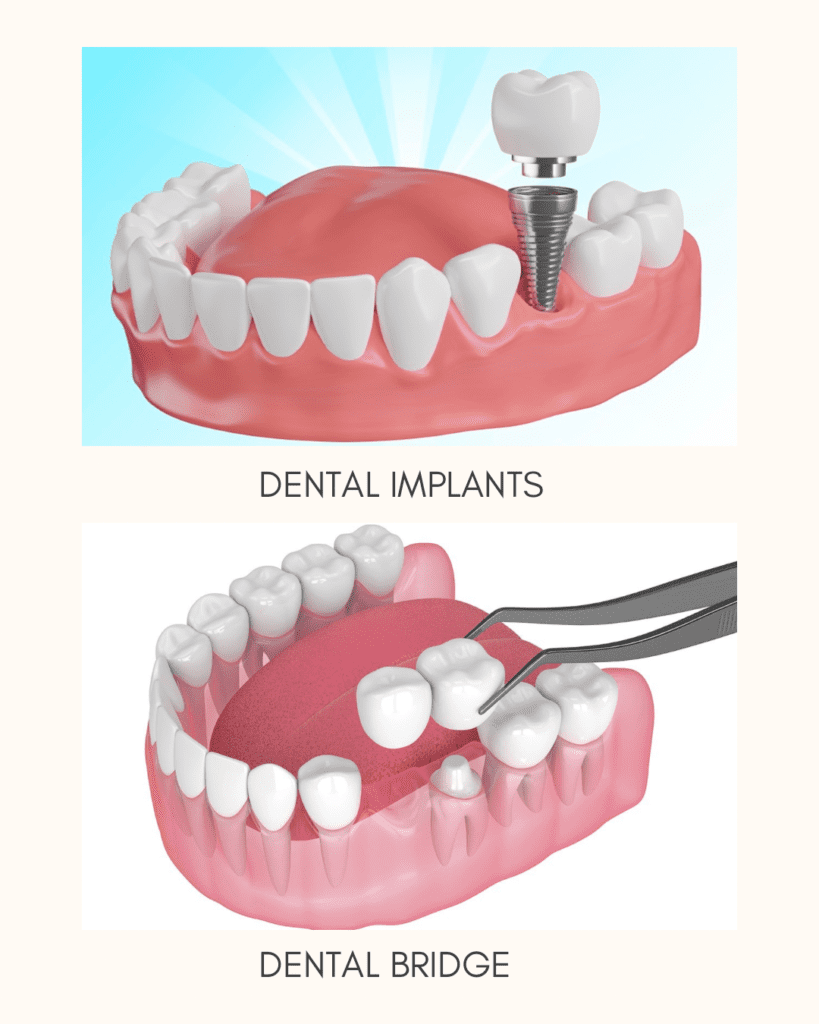
What Is a Dental Implant?
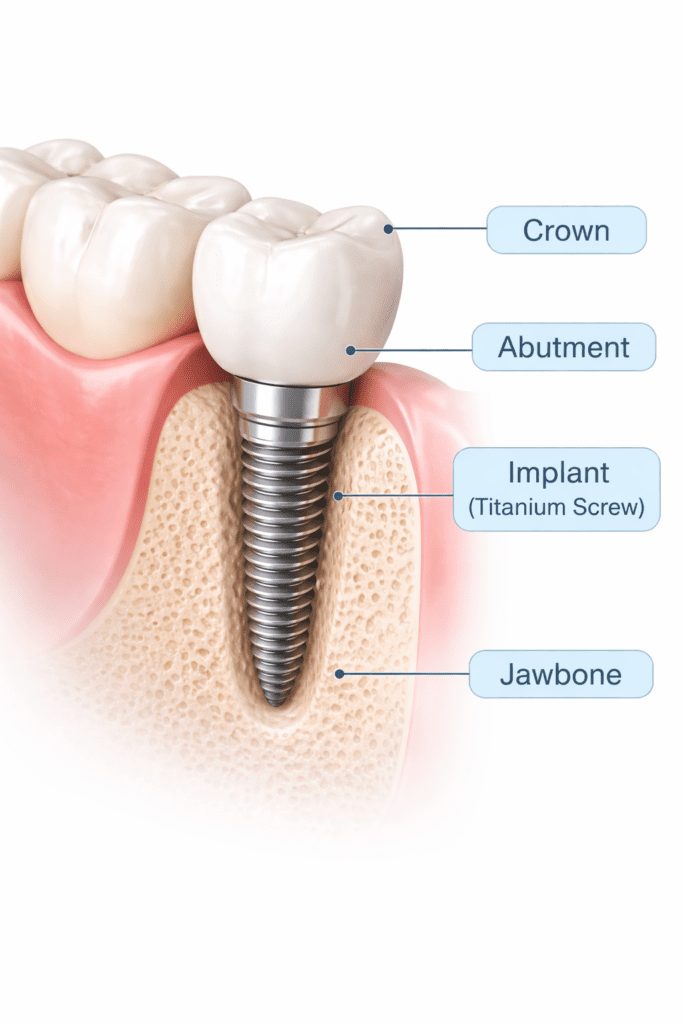
A dental implant is a permanent tooth replacement solution where a titanium screw is surgically placed into the jawbone. This screw acts as an artificial tooth root. After healing, a crown is fixed on top, giving the look and function of a natural tooth.
Key Components of a Dental Implant
- Titanium implant (root)
- Abutment (connector)
- Dental crown (visible tooth)
Dental implants are considered the most advanced and long-lasting solution for missing teeth.
What Is a Dental Bridge?
A dental bridge is a fixed prosthetic device that replaces a missing tooth by anchoring it to the adjacent natural teeth. These supporting teeth are trimmed, and crowns are placed on them to “bridge” the gap.
Types of Dental Bridges
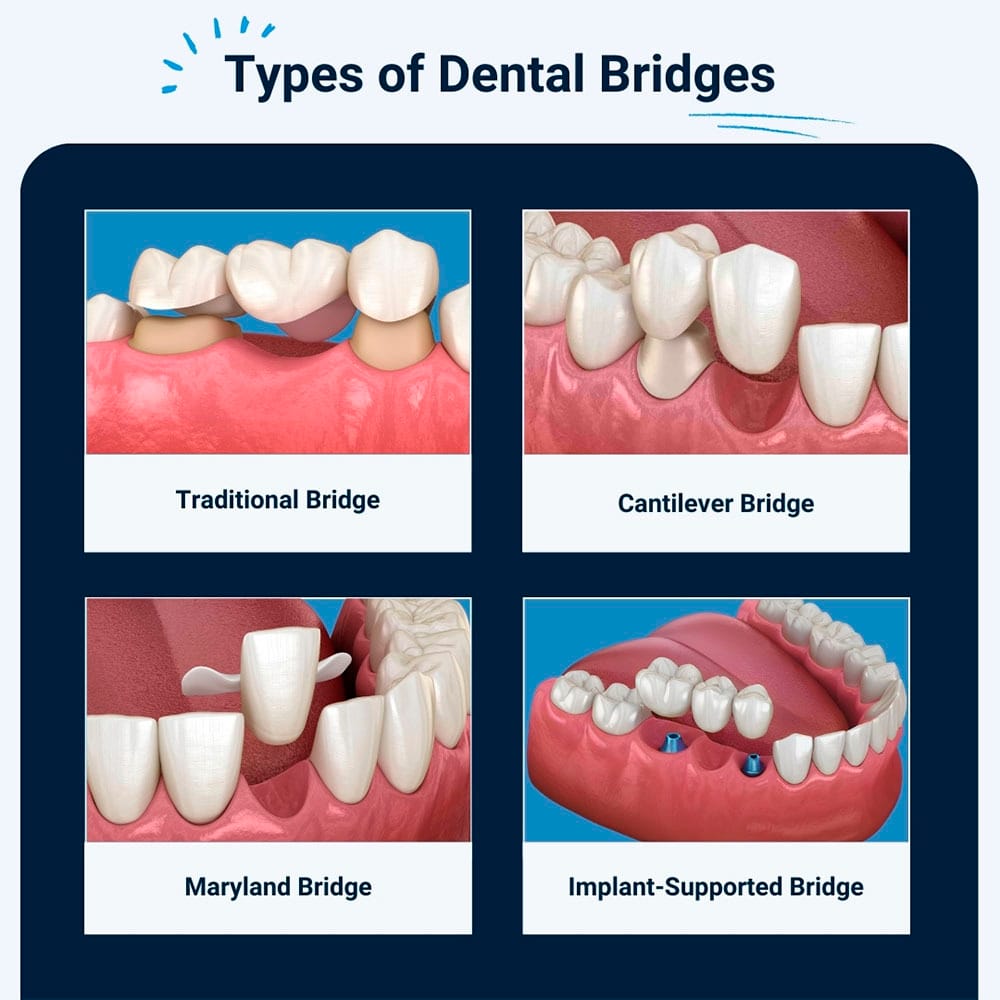
- Traditional bridge
- Cantilever bridge
- Maryland bridge
- Implant-supported bridge
Bridges are a quicker and less expensive solution compared to implants.
Dental Implant vs Bridge: Detailed Comparison
1. Procedure Comparison
Dental Implant
- Requires minor surgery
- Healing time: 3–6 months
- Jawbone integration (osseointegration)
Dental Bridge
- No surgery
- Adjacent teeth must be trimmed
- Faster completion (1–4 days)
Winner: Bridge (for quick treatment)
2. Longevity & Durability
Dental Implant
- Can last 20–25 years or lifetime
- Highly durable and stable
Dental Bridge
- Average lifespan: 7–15 years
- Needs replacement over time
Winner: Dental Implant 🏆
3. Impact on Natural Teeth
Dental Implant
- Does NOT affect nearby teeth
- Preserves natural tooth structure
Dental Bridge
- Requires cutting healthy adjacent teeth
- May weaken supporting teeth
Winner: Dental Implant 🏆
4. Bone Health & Jaw Support
Dental Implant
- Prevents bone loss
- Stimulates jawbone like a natural tooth
Dental Bridge
- Does not prevent bone loss
- Bone shrinkage may occur over time
Winner: Dental Implant 🏆
5. Appearance & Comfort
Dental Implant
- Looks and feels like a natural tooth
- No slipping or discomfort
Dental Bridge
- Good appearance initially
- May feel bulky over time
Winner: Dental Implant 🏆
Dental Implant vs Bridge: Differences in Cost
When comparing dental implant vs bridge, cost is one of the most important factors for patients. Both treatments differ significantly in initial price, long-term value, and maintenance cost.
6. Cost of Dental Implants
The cost of a single dental implant is usually higher because it involves advanced technology and multiple components.
Average Dental Implant Cost in India:
- ₹25,000 – ₹60,000 per tooth
- Premium implants may cost more depending on brand and bone condition
What the cost includes:
- Titanium implant (artificial root)
- Surgical procedure
- Abutment
- Dental crown
- Long-term durability
👉 Although the initial cost is high, dental implants often last 20+ years, making them cost-effective in the long run.
7. Cost of Dental Bridges
A dental bridge is generally more affordable upfront because it does not involve surgery.
Average Dental Bridge Cost in India:
- ₹10,000 – ₹30,000 (depending on type and material)
What the cost includes:
- Crowns for adjacent teeth
- Artificial tooth (pontic)
- Laboratory charges
👉 However, bridges may need replacement after 7–15 years, increasing long-term expenses.
Dental Implant vs Bridge: Quick Comparison Table
| Feature | Dental Implant | Dental Bridge |
|---|---|---|
| Treatment Time | Longer | Short |
| Lifespan | 20+ years | 7–15 years |
| Bone Preservation | Yes | No |
| Effect on Adjacent Teeth | None | Teeth trimming required |
| Cost | Higher initially | Lower initially |
| Maintenance | Easy | Moderate |
Pros and Cons of Dental Implants
✅ Advantages
- Long-lasting solution
- Prevents jawbone loss
- Natural look & feel
- No damage to nearby teeth
❌ Disadvantages
- Higher cost
- Requires surgery
- Longer treatment time
Pros and Cons of Dental Bridges
✅ Advantages
- Faster treatment
- Affordable option
- No surgery required
❌ Disadvantages
- Damages healthy teeth
- Shorter lifespan
- Does not prevent bone loss
Dental Implant vs Bridge: Which Is Right for You?
Choose Dental Implant if:
- You want a permanent solution
- You have good bone density
- You prefer long-term benefits
Choose Dental Bridge if:
- You want a quick replacement
- You are on a limited budget
- Surgery is not an option
Expert Recommendation
From a long-term oral health perspective, dental implants are the gold standard. Although bridges may seem cost-effective initially, implants provide better durability, comfort, and bone preservation.
Frequently Asked Questions (FAQs)
Is a dental implant better than a bridge?
Yes, in most cases, dental implants are better because they last longer and protect jawbone health.
Which is cheaper: implant or bridge?
A dental bridge is cheaper initially, but implants are more cost-effective in the long run.
Is dental implant painful?
The procedure is done under local anesthesia, so pain is minimal and manageable.
Can a bridge be replaced with an implant later?
Yes, but bone loss may require additional procedures like bone grafting.
Conclusion: Dental Implant vs Bridge
When comparing dental implant vs bridge, implants clearly offer superior long-term benefits, while bridges remain a practical short-term solution. The right choice depends on your oral health, budget, and expectations.
👉 Consult an experienced dentist to determine the best tooth replacement option for your smile.